
The Adir Operating System: Is the U.S.-Israel Bond More Than Just an Alliance?
Context
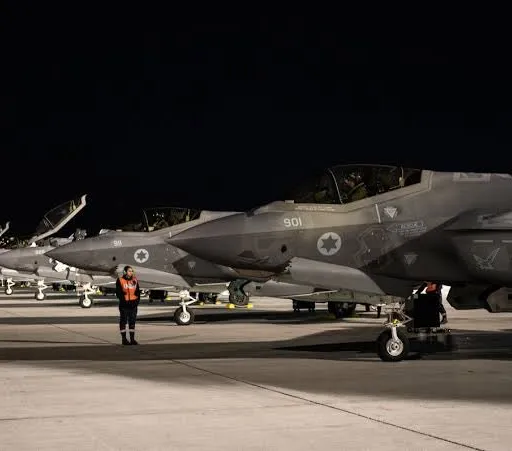
The recent $11.4 million software upgrade for Israel’s F-35I fleet, approved on the same day as a massive 100-target strike in Lebanon, highlights a unique military relationship that goes far beyond standard defense cooperation. Unlike any other F-35 operator, Israel flies the "Adir," a sovereign-customized variant featuring Israeli-made electronic warfare suites and independent command-and-control software that can be modified without American approval. This "Qualitative Military Edge" (QME) is not just a preference but a binding U.S. statute that mandates Israeli air superiority over any other nation in the region. This raises a profound question about the nature of modern geopolitics: has the partnership evolved into a singular, integrated "operating system" where hardware, software, and even trade tariffs form a unified front against shared adversaries? In an era where software upgrades are as lethal as munitions, does this level of technological autonomy for one nation redefine the very concept of a traditional military alliance? If the F-35I is the only aircraft of its kind with "open architecture" permission, what does that say about the level of strategic trust—and dependency—between Washington and Jerusalem compared to other NATO allies?
Top answers
No answers yet. Be the first to answer!