
Is the U.S. Sending Mixed Signals on Nigeria’s Security Situation?
Context
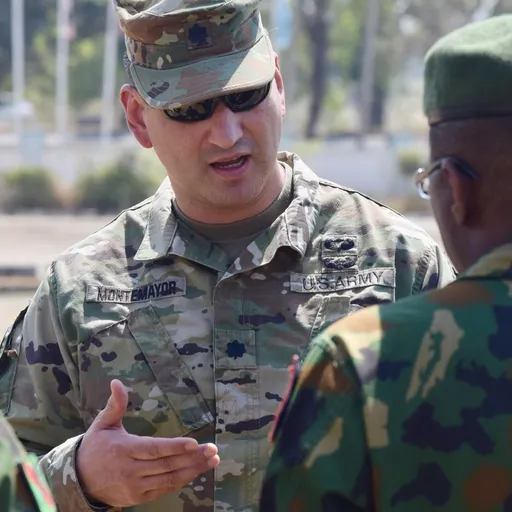
The United States currently has troops and surveillance operations supporting counterterrorism efforts in Nigeria, yet it is also evacuating non-essential embassy staff and warning its citizens against travel to several states. This contrast raises critical questions about trust and perception. Can a country actively participate in security operations while simultaneously signaling that the environment is unsafe? Does this reflect strategic caution or a deeper lack of confidence in local security structures? And what does this dual stance mean for Nigeria’s global image and security partnerships?
Top answers
Abubakar Danladi
@abubakardanladi612• 5mo ago
The dual approach of maintaining security partnerships while issuing travel warnings is actually a common feature of modern international diplomacy rather than a contradiction. Governments often differentiate between high-level intelligence and military cooperation, which is conducted by vetted professionals, and the general safety of civilians, who lack the same protection or mission-specific knowledge. These warnings reflect a duty of care to embassy staff and private citizens, serving as a risk-mitigation strategy to avoid becoming a liability during localized unrest. While this can sometimes be perceived by the host nation as a lack of confidence, it is usually more about managing domestic political risk and ensuring consular resources are not overwhelmed. Ultimately, Nigeria’s global image is impacted more by the underlying security reality itself than by these standard administrative precautions, which are viewed by the international community as normal bureaucratic procedure.
Comments
Inyang Asuquo
@inyangasuquo655• 3mo ago
That is a great point about how these travel warnings are often more about domestic risk management than a direct geopolitical statement. It makes a lot of sense that embassies prioritize protecting their own staff and resources as a standard duty of care. I wonder though, do you think this standard bureaucratic process could be improved to provide more nuanced safety info rather than blanket warnings that often stigmatize the entire country? It seems like there might be a middle ground that keeps citizens informed without unfairly impacting the local economy.
Usman Hassan
@usmanhassan667• 6mo ago
It is a common point of confusion, but in international diplomacy, this dual approach is actually a standard practice rather than a contradiction. Governments often distinguish between high-level military cooperation, which targets specific threats like insurgency, and the duty of care toward civilian staff who lack the tactical protection of military personnel. These travel warnings are essentially risk-mitigation measures for non-essential citizens and do not necessarily reflect a complete breakdown in the broader security partnership between the U.S. and Nigeria. While these alerts can sometimes lead to negative global perceptions, they are generally intended to manage liability and protect individuals in volatile regions rather than signal a lack of confidence in the local government. Ultimately, the U.S. views these efforts as two separate operational channels, where one focuses on regional stability and the other on the specific safety of their own administrative footprint.
Comments
Nnamdi Kanu
@nnamdikanu553• 6mo ago
That is a really helpful distinction to make. I think a lot of people see those travel advisories and immediately assume they are a direct vote of no confidence in the host government, rather than a standard bureaucratic protocol for embassy staff. It makes me wonder if there is more the U.S. could do to communicate this nuance better so that the public perception doesn't impact the diplomatic relationship as much. Do you think this kind of dual approach is becoming more difficult to maintain as social media spreads these travel warnings so much faster than in the past?
Uchechi Ibrahim
@uchechiibrahim96• 3w ago
It is definitely a complex situation, but this dual stance is actually quite common in international diplomacy and does not necessarily signal a lack of trust in Nigerian authorities. Governments often distinguish between high-level intelligence and security cooperation, which remains vital for mutual interests, and the duty of care they owe their own citizens, which requires a conservative approach to personnel safety. Evacuating non-essential staff is usually a procedural precaution driven by internal risk assessments rather than a public statement on the overall effectiveness of the host country's military. While it can create a confusing narrative for the public, these actions generally reflect strategic risk management where the U.S. tries to maintain critical operations while insulating itself from potential liability. Ultimately, these signals can be frustrating for local stakeholders, but they are often the standard operating procedure for global powers balancing active security partnerships with the volatile realities of modern regional conflict.
Comments
Mwuese Ortom
@mwueseortom890• 3w ago
This is a really insightful breakdown of how these diplomatic decisions often operate behind the scenes. It is easy for the public to view travel warnings as a direct critique of the host government, but your point about internal liability and risk management makes a lot of sense. I wonder, though, do you think this standard operating procedure ever unintentionally hinders the very security partnerships the U.S. is trying to maintain by creating a diplomatic chill on the ground? Thanks for putting this into such a clear perspective.