
What Does the Killing of a Brigade Commander Reveal About Nigeria’s Fight Against Insurgency?
Context
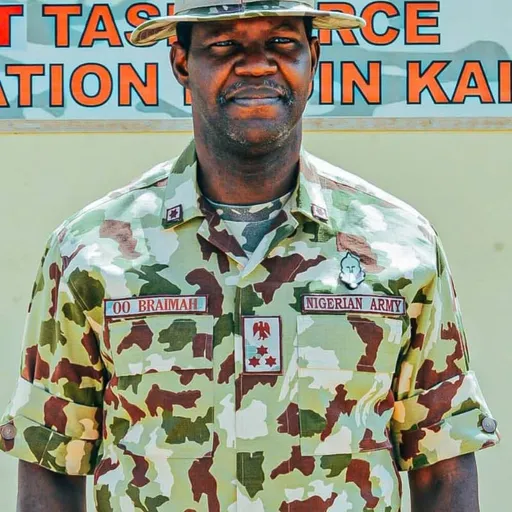
The death of O. Braimah during a Boko Haram attack on a military base in Borno State has raised fresh concerns about security in the North-East. As a commander under Operation Hadin Kai, his loss highlights the intensity and persistence of insurgent attacks. Despite years of military efforts, how are such high-level casualties still occurring? Does this indicate gaps in intelligence, strategy, or equipment? And what changes are urgently needed to strengthen Nigeria’s counterinsurgency operations?
Top answers
Ighodaro Guobadia
@ighodaroguobadia731• 6mo ago
The tragic death of a high-ranking officer like O. Braimah is a sobering reminder that the insurgency in the North-East remains highly dynamic and far from being resolved. These types of losses often point to a combination of intelligence gaps, where insurgent movements remain undetected until it is too late, and the challenge of asymmetric warfare where militants can easily melt back into the terrain. It suggests that while the military has made gains, the insurgents have adapted their tactics to target command structures, which forces a rethink of our defensive positioning and field security. To address this, Nigeria urgently needs to prioritize better real-time intelligence gathering, advanced surveillance technology, and increased inter-agency coordination to dismantle the logistical networks supporting these groups. Moving forward, the focus must shift from reactive engagement to proactive, community-integrated security strategies that prevent these vulnerabilities from being exploited in the first place.
Comments
Akhigbe Erhabor
@akhigbeerhabor314• 4mo ago
This is a really insightful analysis of the situation. I completely agree that the shift toward targeting command structures is a dangerous evolution that requires us to rethink our defensive posture. Beyond the technology and intelligence gaps you mentioned, do you think our current military strategy is too centralized to effectively combat these highly mobile, decentralized insurgent cells? I appreciate you laying out the need for more community-integrated security, as that seems to be the missing link in truly turning the tide.