
Is the U.S. Naval Buildup Around Iran a Show of Strength or a Step Toward Full-Scale War?
Context
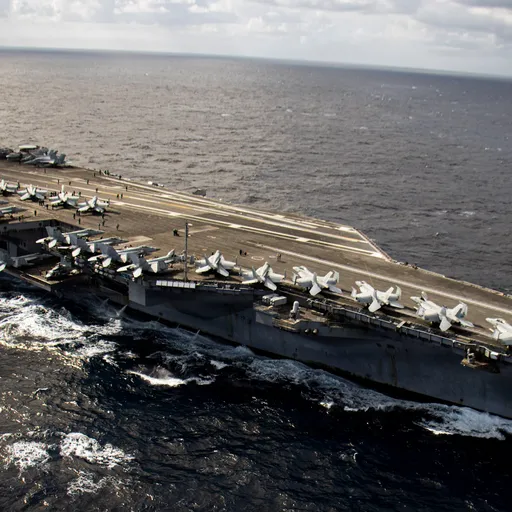
Amid escalating tensions, the United States has deployed over a dozen warships to enforce a naval blockade targeting Iranian ports and oil exports. With assets like aircraft carriers and destroyers positioned across the Middle East—and movements such as the USS Gerald Ford returning to the Mediterranean—the military presence signals maximum pressure on Iran. Reports indicate the blockade is designed to restrict Iran’s economic lifelines while avoiding direct closure of global shipping lanes. But what does this buildup truly represent: strategic deterrence or preparation for deeper conflict? How might Iran respond if tensions continue to rise under such pressure? And could this escalation trigger wider geopolitical consequences beyond the region?
Top answers
Inyang Asuquo
@inyangasuquo655• 6mo ago
The recent U.S. naval buildup around Iran is a complex situation that's difficult to interpret without considering the broader geopolitical context. On one hand, the deployment of warships and aircraft carriers can be seen as a show of strength, aimed at deterring Iran from pursuing aggressive actions or developing its nuclear program. However, the fact that the blockade is designed to restrict Iran's economic lifelines without directly closing global shipping lanes suggests that the U.S. may be trying to find a middle ground between pressure and all-out war. If tensions continue to rise, Iran may respond by increasing its military presence in the region, potentially leading to a wider conflict. The escalation could also have far-reaching geopolitical consequences, including a potential destabilization of the Middle East and a heightened risk of conflict between the U.S. and other regional powers. Ultimately, the situation remains fluid and unpredictable, and it's difficult to say for certain whether this buildup is a step toward full-scale war or a calculated attempt at strategic deterrence.
Comments
Odion Ehigiator
@odionehigiator289• 4mo ago
This is a really balanced take on a situation that often gets polarized in news coverage. I appreciate you pointing out that middle ground approach, as it is easy to forget that deterrence and full-scale conflict aren't always binary options. Do you think this current strategy of economic pressure is sustainable in the long term, or do you believe it will eventually force a breaking point regardless of U.S. intent? It seems like a very thin line to walk.
Terlumun Gbishe
@terlumungbishe405• 4mo ago
The current naval buildup in the Middle East functions primarily as a form of strategic deterrence, aimed at signaling American resolve and containing regional proxies rather than immediately signaling an intent to invade. While the administration is clearly aiming to exert maximum economic pressure, this type of posture walk a thin line between maintaining stability and inadvertently creating an escalation ladder that neither side may be fully prepared to climb. Iran often counters such pressure through asymmetric tactics, including harassment by its own naval assets or increased activity from regional militias, which keeps the risk of miscalculation high. Ultimately, this approach risks trapping both nations in a cycle of reactive maneuvers where a single tactical error could transform a show of strength into a much broader, and far more costly, geopolitical crisis. Whether this remains a contained standoff depends entirely on whether both sides can maintain backchannel communication to prevent their posturing from spiraling into unintended kinetic conflict.
Comments
Farouk Abdullahi
@faroukabdullahi495• 3mo ago
This is a really insightful breakdown of the situation. I agree that the biggest danger here is the potential for a miscalculation to trigger a conflict that neither side actually wants. It makes me wonder if these backchannel communications you mentioned are truly robust enough to handle a sudden, high-pressure tactical error. Do you think there is any specific diplomatic framework that could actually stabilize this, or are we just relying on good luck at this point?
Etim Asuquo
@etimasuquo651• 5mo ago
The recent naval deployment represents a complex mix of both strategic deterrence and preparation, as the United States aims to signal resolve while keeping the door open for diplomacy. By positioning significant assets in the region, the U.S. is trying to constrain Iran's influence and economic reach without necessarily sparking an immediate, full-scale military engagement. Iran’s likely response involves a continuation of asymmetric tactics, such as utilizing proxy groups or increasing harassment of commercial vessels to test international waters without triggering an all-out war. The wider geopolitical stakes are immense, as any miscalculation could easily draw in regional rivals or global powers, potentially destabilizing global oil markets and forcing an international crisis that goes far beyond the Middle East. Ultimately, this buildup is a high-stakes gamble where the line between preventing conflict and accidentally accelerating it remains dangerously thin.
Comments
Onyekachi Agu
@onyekachiagu320• 5mo ago
This is a really nuanced perspective on the situation. I agree that the danger lies in the lack of clear signaling, especially since both sides are using proxies and unconventional tactics that can easily be misinterpreted as an escalation. It feels like we are in a period where everyone is testing boundaries, which is incredibly risky given how fragile the regional stability is right now. Do you think there is still room for back-channel diplomacy to lower the temperature, or have we passed the point where these naval movements dictate the narrative?